














New Mining Law to Give Chiefs Greater Control Over Mining Activities
The Minister for Lands and Natural Resources, Emmanuel Armah-Kofi Buah, says the government is introducing sweeping changes to Ghana’s mining laws to strengthen traditional authorities’ involvement in the allocation of mining licences and ensure mining communities benefit more directly from mineral resources.


He says a new mining law currently before Parliament will make recommendations from District Mining Committees, which include traditional authorities, a mandatory requirement before small-scale mining licences are granted.
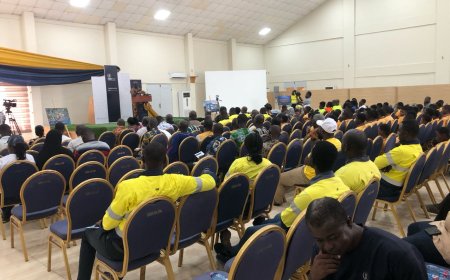
Speaking at the launch of the Responsible Cooperative Mining and Skills Development Programme at Akoon, a suburb of Tarkwa, Mr Armah-Kofi Buah said the move would prevent individuals from obtaining mining licences without the knowledge and approval of chiefs, who are custodians of the land.
The Minister also announced plans to introduce a medium-scale mining licence category to bridge the gap between small-scale and large-scale mining, particularly for Ghanaians who lack the financial capacity to undertake large-scale operations.
He says the proposed reforms will also tackle the practice where individuals hold exploration licences for several years without undertaking meaningful mining activities, sometimes with the intention of selling them to foreign investors or using them to facilitate illegal mining.
Under the proposed arrangement, exploration licences will be valid for five years, with an assessment after the first two years to determine whether holders have made progress.
Mr Armah-Kofi Buah says failure to undertake meaningful work within the five years will result in the land being returned to the traditional authorities.
On benefits to mining communities, the Minister says the government is also reviewing agreements between mining companies and the state to ensure communities directly affected by mining receive a fairer share of the benefits.
He says the proposed law will introduce Community Development Agreements alongside government agreements with large-scale mining companies, particularly in mining areas such as Tarkwa-Nsuaem.
The arrangement, he explains, is intended to address the inadequacy of benefits often received by communities despite the far-reaching effects of mining on their livelihoods and environment.
The proposed reforms form part of the government's broader efforts to promote responsible mining, strengthen community participation and ensure that mineral resources translate into tangible development for mining communities.
Source: Nana Esi Brew Monney
DISCLAIMER: The Views, Comments, Opinions, Contributions and Statements made by Readers and Contributors on this platform do not necessarily represent the views or policy of Space FM.
What's Your Reaction?
 Like
0
 Dislike
0
 Love
0
 Funny
0
 Angry
0
 Sad
0
 Wow
0