







Tarkwa Takes Centre Stage as Gold Fields Eyes 20 More Years
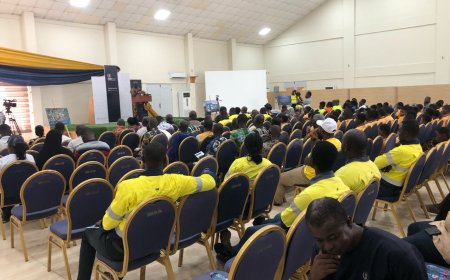
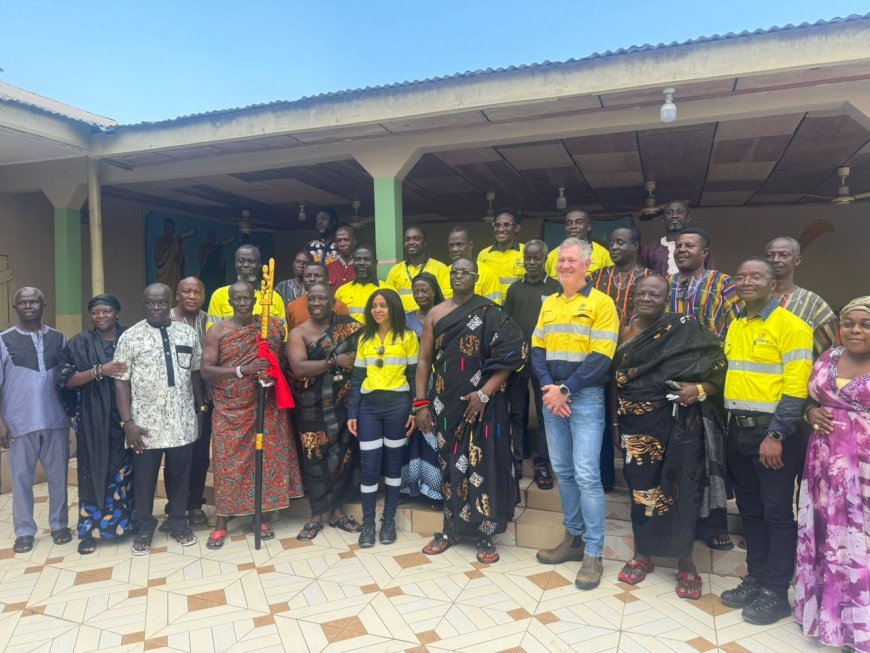
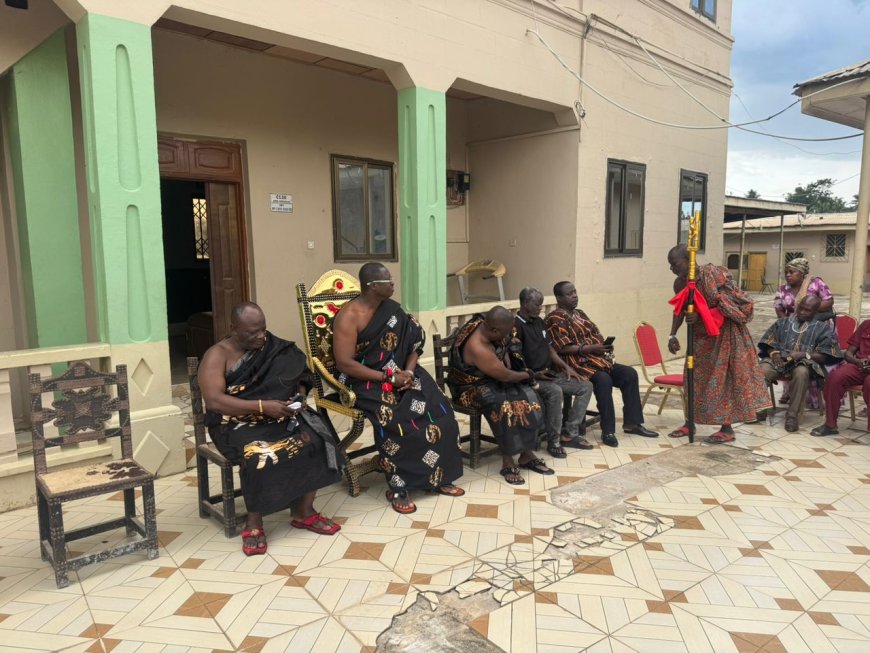
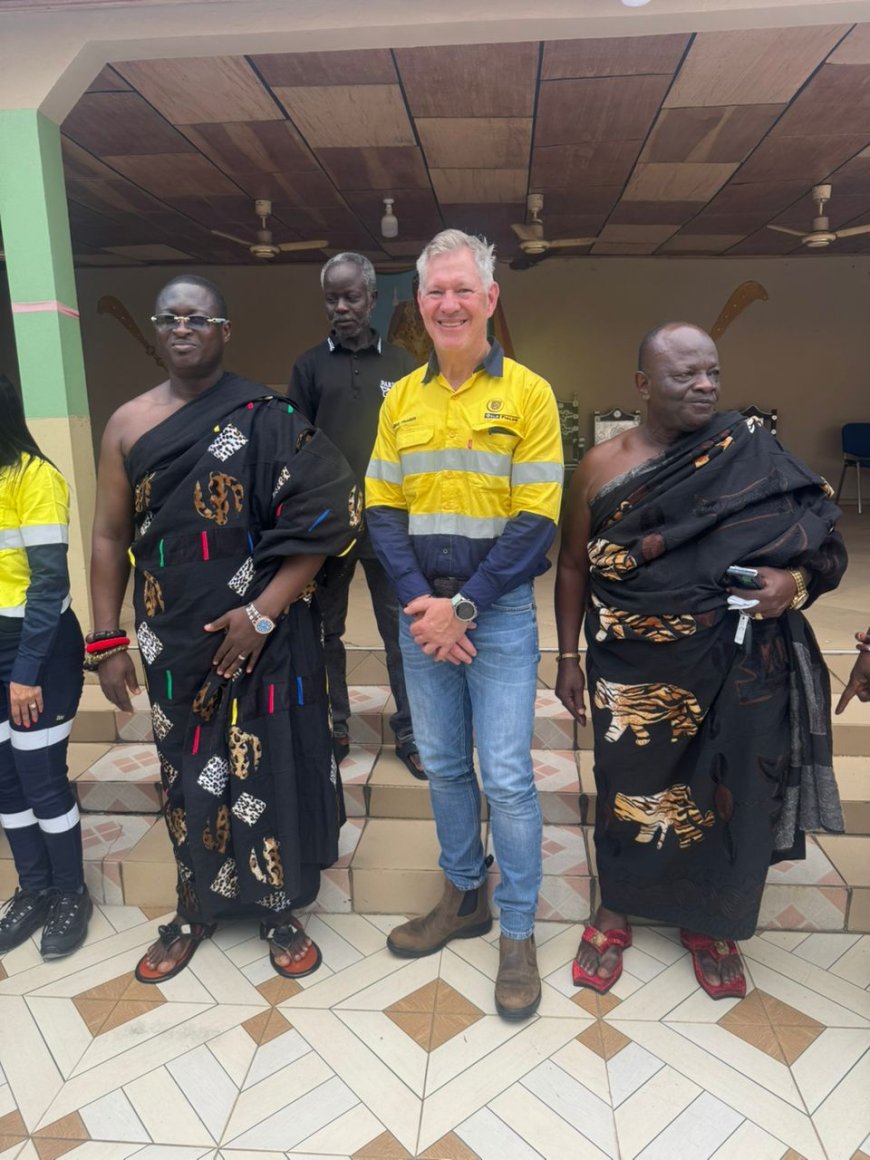
Under the steady gaze of chiefs clad in rich kente, the man who steers Africa's largest gold mining operation made a promise that echoed through the ancient, gold-bearing soils of this historic town.

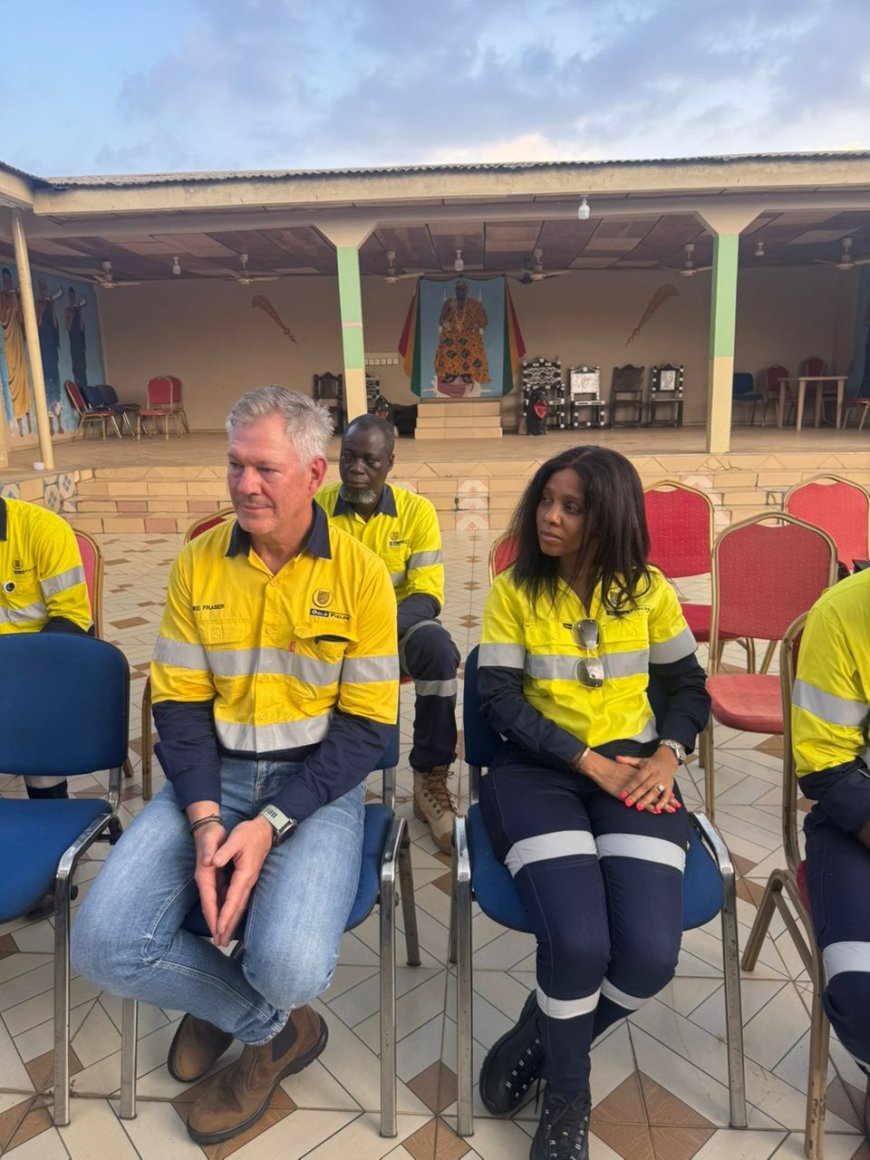
Gold Fields will not walk away from Tarkwa.
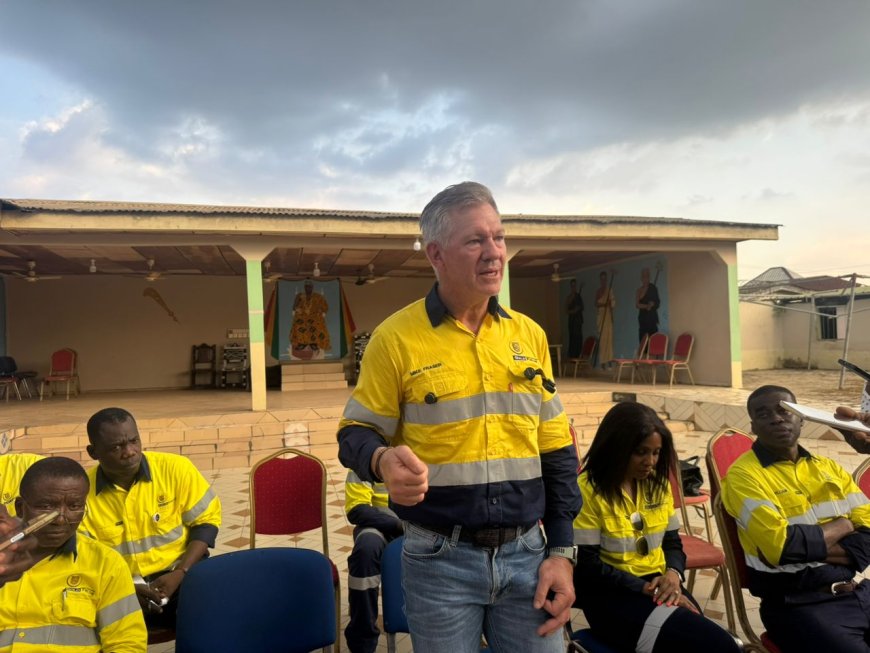
Group Chief Executive Mike Fraser, standing on ground his company has worked for generations, announced that the mining giant has formally submitted an application for a 20-year lease extension at the Tarkwa Mine a move that signals not just endurance, but a deepening of roots in Ghanaian earth.
"We are not going to give up in any way on Tarkwa," Fraser told traditional leaders at Awudua, his voice carrying both resolve and a tinge of regret for what was lost.
That loss - the Damang Mine, no longer under Gold Fields' control after more than three decades — still stings. But Fraser framed it not as an ending, but as a careful, costly handover designed to protect something more precious than gold: livelihoods.
"We were very clear that the most important thing for us is that all of those jobs and livelihoods that depended on the Damang mine continue," he said. "We invested quite a lot in ensuring the sustainability of that mine. What we've seen today is a mine that continues without interruption. That, to us, was the most important thing."
Yet even as Damang slips from its portfolio, Gold Fields' commitment to Ghana has not dimmed. The numbers speak: 25 percent of the company's global output still rises from Ghanaian earth, almost entirely from Tarkwa. One of every four ounces the company produces worldwide carries the signature of this West African nation.
The next two decades, Fraser explained, will demand transformation. More material moved. More fleet and equipment deployed. More manpower hired.
"It will set up Tarkwa to be a truly world-class asset for another 20 years," he said. "And during that time, we can consider how to continue extending the life of that asset beyond."
But the CEO's candor revealed a quieter frustration. The reason he doesn't spend enough time actually at the mine? He's been in Accra, lobbying, meeting with the minister, the minerals commission, the finance minister, anyone with a hand in shaping Gold Fields' future in the country.
"I have to lift a lot of work to present the case of why Gold Fields," he admitted.
And what is that case? It is, Fraser insisted, more than shareholder returns. "A key part of our strategy is to make a meaningful difference in the host communities where we operate."
Dr. Nana Adarkwa Bediako III, Gyasehene of the Apinto Divisional Council, welcomed the CEO with the frankness of a man who has seen mining companies come and go. The chiefs, he said, have a list and it is not small.
First: the road from Awudua junction through the town to Prestea. "That," the chief said quietly, "will be Gold Fields' landmark in Ghana forever."
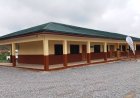
Then came a deeper dream. The traditional authorities have already poured their own money into building the bones of a College of Health in Awudua. The Ministry of Health has come to inspect. But what stands is not enough.
"There are only four colleges of health in Ghana," Dr. Nana Adarkwa Bediako III
reminded the gathering. "Imagine the traditional seat of the Apinto Divisional Council, Awudua, becoming home to a modern, state-of-the-art college. It would be a beautiful thing to behold."
Mike Fraser listened. He did not promise the college on the spot. But he did not say no, either. And in towns like Awudua where hope is often measured in shifts and tonnes, a CEO who stays to listen, who fights for a 20-year lease not just for the gold but for the community around it, is already rare.
Gold Fields came to Tarkwa for what lies beneath. But if the chiefs have their way, the company's true monument will rise above ground: a road, a school, and a future that outlasts the last ounce.
Source: Nana Esi Brew Monney
What's Your Reaction?
 Like
0
Like
0
 Dislike
0
Dislike
0
 Love
0
Love
0
 Funny
0
Funny
0
 Angry
0
Angry
0
 Sad
0
Sad
0
 Wow
0
Wow
0